How to Write a Weather-Journal Entry That Still Makes Sense Later
Write for the reader you will be tomorrow. “Hot and windy” may capture today’s feeling, but it does not say when you looked, where you stood, what you used, or what “windy” meant. A durable journal entry puts t
Write for the reader you will be tomorrow. “Hot and windy” may capture today’s feeling, but it does not say when you looked, where you stood, what you used, or what “windy” meant. A durable journal entry puts the context beside the impression and leaves unknown details visible instead of rebuilding them from memory.
Use a small later-reader card
Before adding descriptive prose, fill these fields:
| Field | What it protects |
|---|---|
| Date and local time | The moment or interval you are describing |
| Place and position | The part of your home or route represented |
| View or sensor exposure | Obstacles, shade, shelter, surface, and direction |
| Variable and method | What you looked at, measured, or estimated |
| Result | The observation, value, category, or visible cue |
| Uncertainty | What was blocked, approximate, missing, or unverified |
The NWS WxCoder guide shows how an observation record keeps station identity, official observation time, location, elevation, and observation type together. You do not need a formal database to use the principle: keep the meaning of the entry next to the words that describe it.
Separate seeing, measuring, and interpreting
Use three labels when a sentence could be misunderstood:
- Observed: what was visible or directly noticed, such as “small leaves moved continuously.”
- Measured: a value from a stated instrument and method, such as “thermometer displayed 18.4 °C.”
- Interpreted: a tentative explanation, such as “the fence may have sheltered this position.”
The WMO-No. 8 guidance distinguishes a measurement result from its uncertainty and notes that repeatability depends on conditions such as the same procedure, observer, instrument, location, and short time interval. That is why “18.4 °C” without sensor position is a thinner record than “18.4 °C, shaded sensor on the north wall.” The second does not prove the value is representative of the neighbourhood; it tells you what the value belongs to.
Repair a vague entry without inventing facts
Here is the deliberately weak original:
> Original: “Hot and windy this afternoon. Clouds looked bad.”
It contains an impression but no time, place, method, visible cue, or uncertainty. Repair it field by field:
> Repaired: “18 November 2026, 15:40 local — back garden, standing beside the east fence and looking west. The shaded thermometer on the north wall displayed 27.1 °C; sensor height about 1.5 m above paving. Small tree leaves moved continuously, while the sheltered corner showed little movement. I did not measure wind speed or determine wind-from direction. About two-thirds of the visible sky was covered by a grey, uneven layer; the roof blocked the western horizon. ‘Hot’ is retained as a personal impression, not a regional comparison. The phrase ‘looked bad’ is not used because no specific visual feature was recorded.”
The repaired version is not “more scientific” merely because it is longer. It is more reusable because each claim has a field, a method, or a stated limit. The exact temperature remains attached to one sensor and one exposure. The leaves are evidence of movement, not a wind-speed reading. The cloud description is bounded by the blocked horizon.
Record the exposure that travels with the result
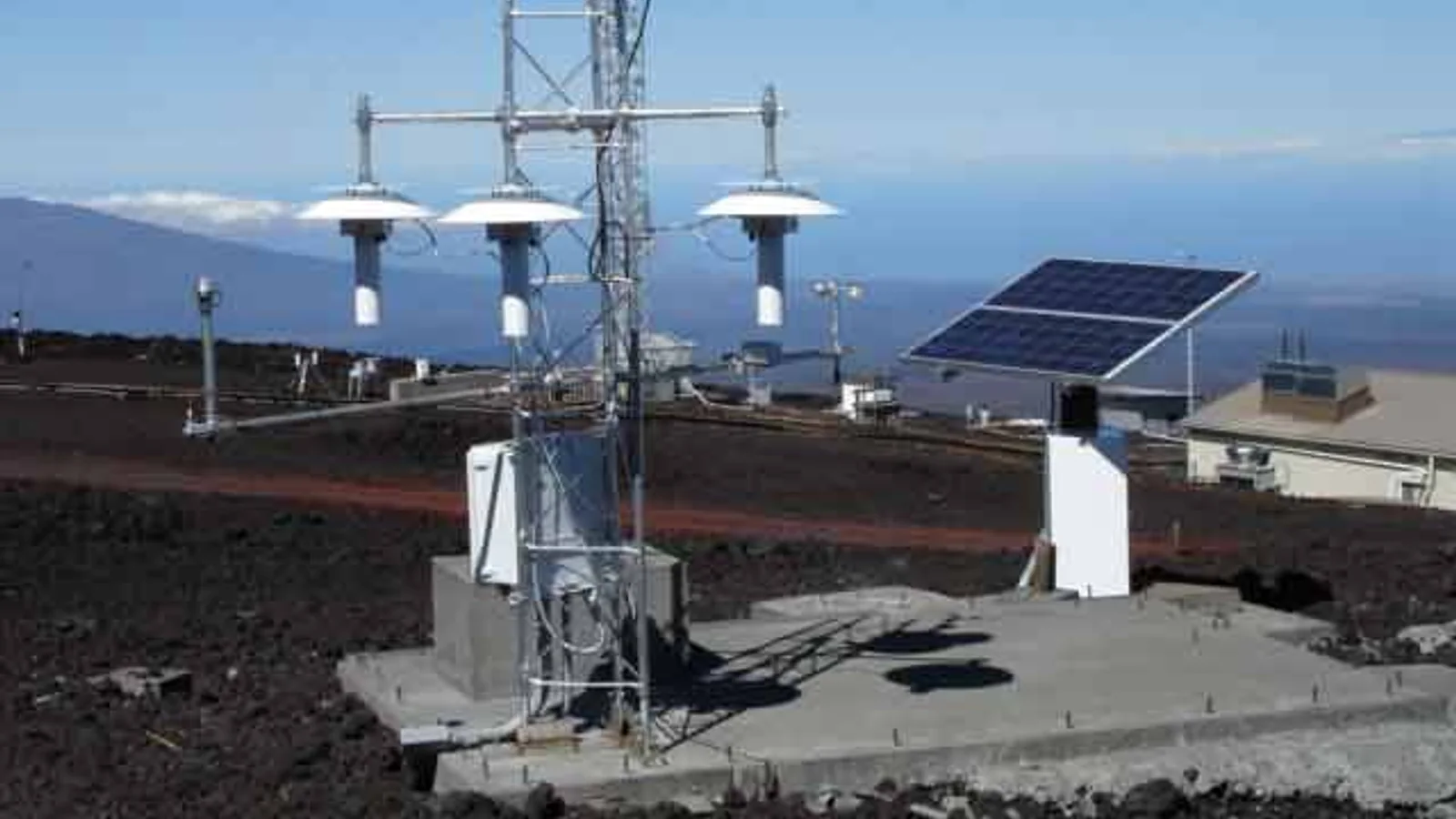
Exposure is part of the context, especially when you compare entries. Note the height of a sensor or your eye level, nearby walls or trees, shade, paving, shelter, and any direction you faced. The WMO station-exposure guidance lists height, sheltering, nearby objects, terrain, surfaces, and dated changes such as new buildings or vegetation growth. It also notes that photographs are more useful when they show the instrument and its surrounding terrain, not only a close-up.
For a home journal, a short note is enough:
> Exposure: north-wall shade; paving below; hedge 2 m east; roof edge blocks the west horizon; no sensor move since last entry.
If the hedge grows or the sensor moves, add a dated change note. Do not silently compare the new exposure with old readings as if the site were unchanged.
Keep an unknown field instead of backfilling it
A journal entry can be complete while containing an unknown. Examples include:
- “Rain began sometime between 14:00 and 14:20; no continuous watch.”
- “Cloud amount estimated from visible sky; trees blocked the northern quarter.”
- “Temperature display read 21.0 °C; sensor exposure not checked during this entry.”
- “Photo time is from the phone; the camera clock may be several minutes fast.”
The NCEI metadata guidance recommends documenting geographic and temporal extents during collection because retroactive reconstruction is harder. Apply the same logic to a personal record: write “not checked” while the uncertainty is still known.
Correct a later interpretation without erasing the first note
Later review may change your interpretation. Keep the original wording and append a dated correction:
> Original, 18 Nov: “Thin high cloud, perhaps cirrus.” > Review, 20 Nov: “Cloud type uncertain; the photo shows a thin veil but not enough detail for a confident identification.”
This preserves what you actually saw and what you later inferred. If an instrument problem is discovered, mark its effect instead of silently deleting the value:
> Review, 21 Nov: “15:40 temperature excluded from comparison because direct sun reached the housing; original display value retained.”
The correction is not an admission that the whole journal failed. It is part of the record’s history, and it tells a later reader which values should not be compared without qualification.
Apply the later-reader test
Before closing the entry, ask:
- Could I identify the date, local time, and represented interval?
- Could I find the place, viewing direction, or sensor position?
- Do I know which words are observation, measurement, or interpretation?
- Can I see what remains unknown or blocked?
- If the site or method changes, is that change dated?
If one answer is no, add a short note rather than a dramatic label. For a first-week routine, see How to Start Keeping a Weather Journal. For month-level review, use How to Review a Month of Weather Notes Without Overclaiming. The aim is not to make every entry formal; it is to make each entry intelligible when the immediate feeling has faded.